A closer look at how Hybrent’s barcode scanning features power hospital inventory management software for healthcare teams.
In healthcare procurement, accuracy matters. The right supplies need to be available when teams need them, purchase orders need to be created quickly, and inventory information needs to stay clean across every location. But when teams rely on manual counts, handwritten notes, or disconnected spreadsheets, small errors can turn into bigger problems: missed stock items, delayed orders, inaccurate lot tracking, and time-consuming reconciliation.
That is where the Hybrent app helps make daily supply management easier.
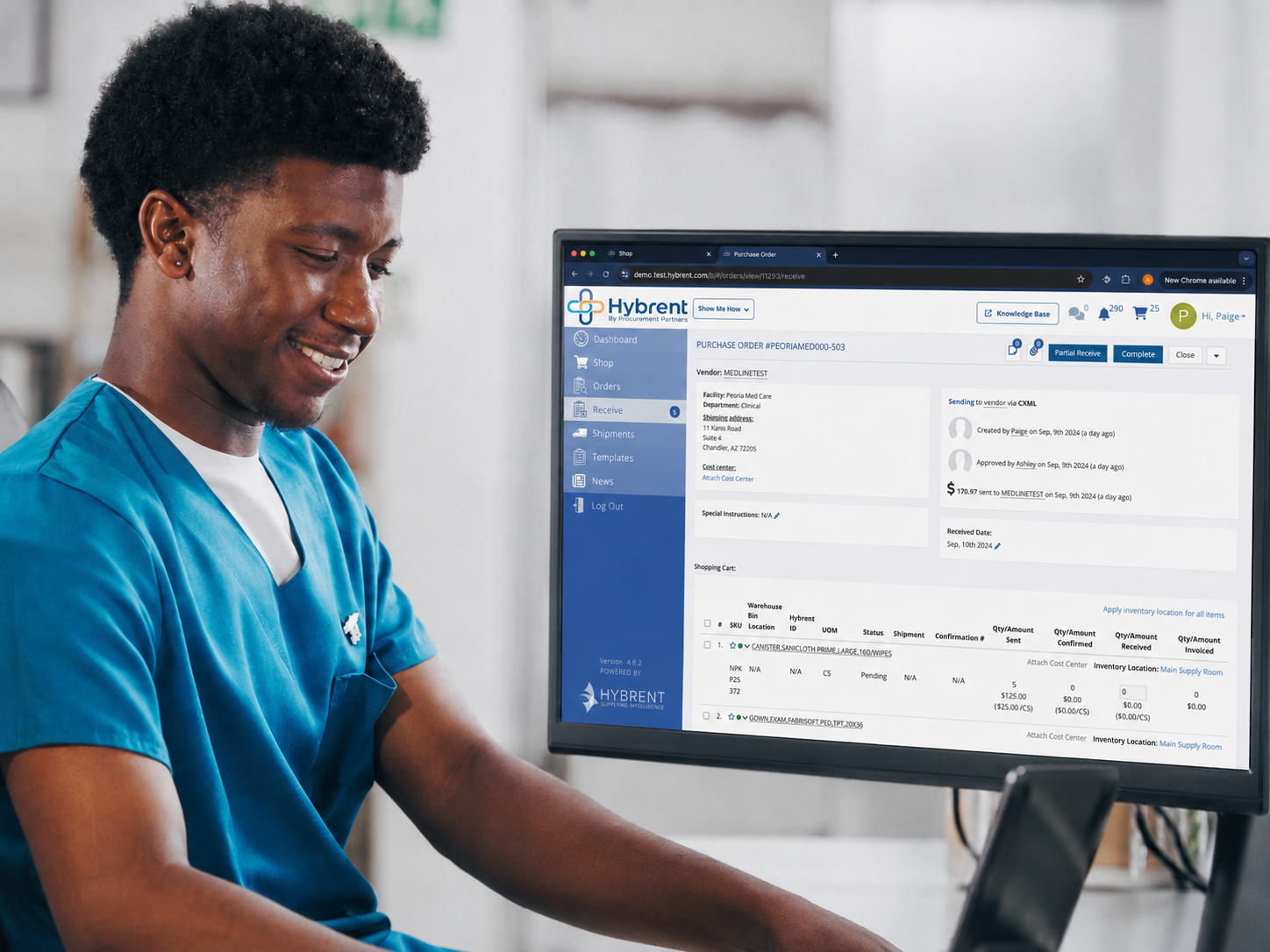
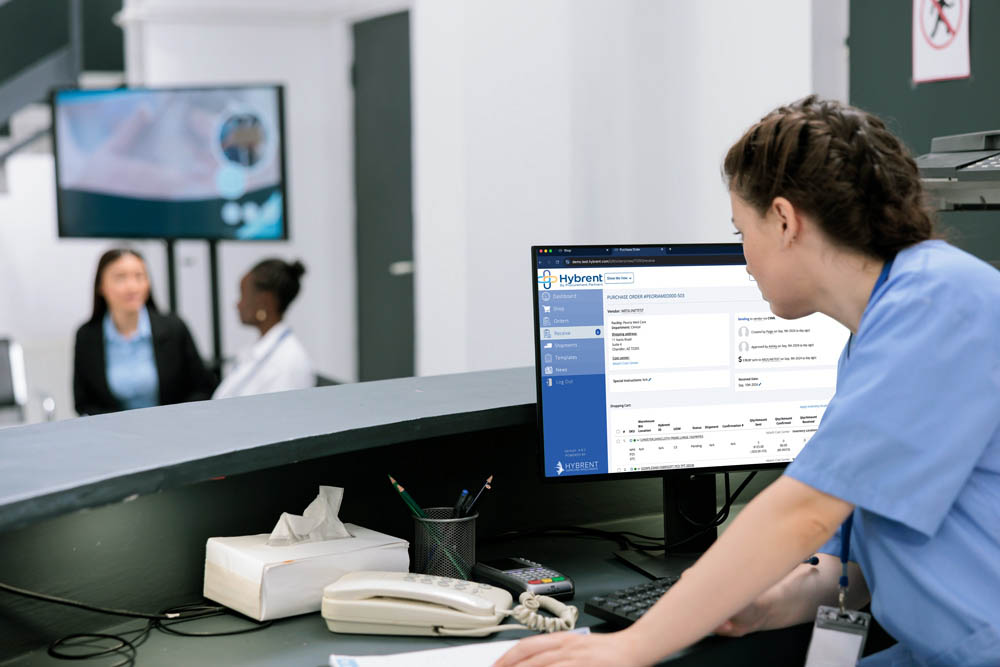
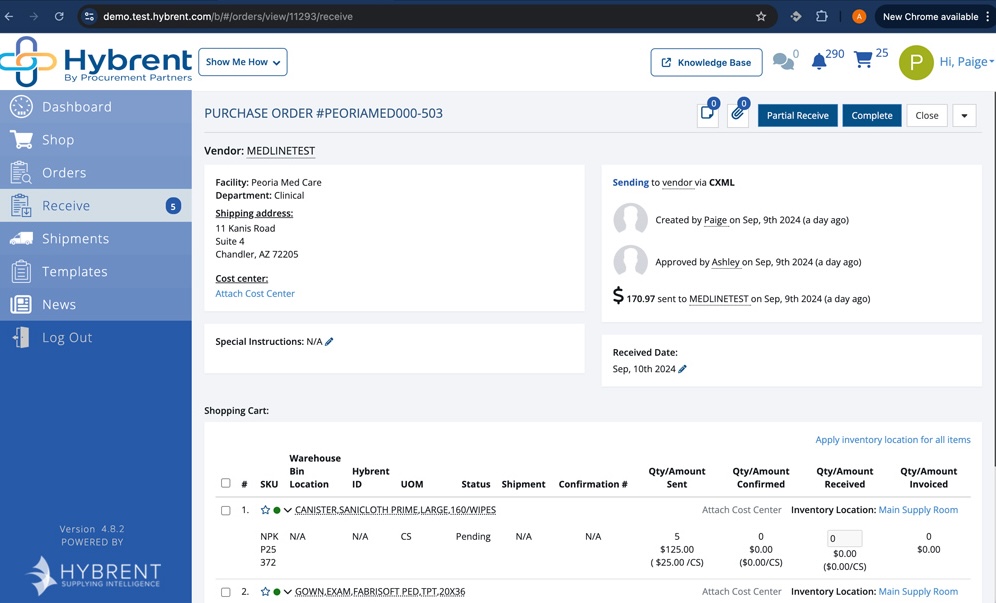
Hybrent helps organizations manage purchasing, inventory, invoicing, and reporting in one connected system — functioning as full-featured hospital inventory management software that also handles ordering, invoicing, and reporting. Its barcode scanning functionality brings speed and accuracy to the workflows healthcare teams use every day, from creating orders to managing stock items and receiving products.
Instead of manually searching for supplies or entering product details line by line, users can scan a barcode directly from a mobile device or tablet. From there, Hybrent helps place the right information into the appropriate fields, reducing the risk of manual entry mistakes and making procurement workflows faster and more consistent.
Barcode Scanning That Supports Real Healthcare Workflows
Healthcare teams move quickly, and barcode inventory management software needs to fit into that pace. The Hybrent app’s barcode scanning feature supports common workflows like checking inventory, creating orders, managing stock items, and building purchase orders.
For example, if a team member notices an item is running low, they can scan the barcode, enter the quantity needed, and move the item into the ordering workflow. Hybrent helps simplify that process so teams do not have to jump between supplier websites, spreadsheets, and internal approval processes just to replenish everyday supplies.
Once items are scanned and added, Hybrent can support the creation of purchase orders, helping ensure ordering is organized by vendor and aligned with the organization’s purchasing process. This helps teams stay consistent while reducing the administrative work that often comes with supply ordering.
Turning Stock Items into Actionable Data
Barcode scanning is especially valuable for medical supply inventory tracking because it connects physical inventory activity to digital records. Instead of relying only on manual counts or memory, staff can scan items as they are used, counted, ordered, or received.
That creates a more accurate picture of what is on hand and what needs attention. It also helps purchasing teams avoid over-ordering, reduce waste, and prevent stockouts. In healthcare settings where supplies are constantly moving, that visibility can make a major difference.
Hybrent’s barcode-driven inventory capabilities support the larger goal of centralized supply chain management: giving teams a simpler way to track inventory, manage ordering, and make more informed decisions across facilities.
Why Barcode Scanning Matters for Hospital Inventory Management Software
Traditional hospital inventory management software has often relied on periodic manual counts or spot audits, which can miss real-time changes in stock between checks. Pairing that software with mobile barcode scanning gives healthcare teams a continuously updated view of what’s on hand — which matters more in healthcare than in most industries, since supply gaps can affect patient care, not just the bottom line.
Why Barcode Format Matters
Not all barcodes are created equal. A basic barcode may identify an item, but healthcare products often require more detail, especially when lot numbers and expiration dates matter.
That is why support for more advanced barcode formats is so important. The GS1 barcode format, which has become close to an industry standard in healthcare supply management, can contain multiple pieces of information in one scan. Instead of only identifying the product, a GS1 barcode can include details such as item identifiers, lot numbers, and expiration dates.
For healthcare organizations, this matters because lot and expiration tracking are not just nice-to-have details. They support inventory accuracy, recall readiness, waste reduction, and better compliance practices. When a barcode can carry that information and the system can place it into the correct fields, teams spend less time typing and more time managing supplies with confidence.
Less Manual Entry, Fewer Mistakes
Manual entry creates risk. A mistyped lot number, missed expiration date, or incorrect item quantity can lead to confusion later in the workflow. With barcode scanning, Hybrent helps reduce that risk by capturing key information at the source.
When users scan a barcode, the app can help populate the appropriate fields for the item, including relevant product information and, when available through the barcode format, lot and expiration details. That makes the data cleaner from the beginning and helps downstream processes, including inventory tracking, receiving, purchase orders, and reporting.
Cleaner data also supports better decision-making. When inventory records are accurate, leaders can better understand usage patterns, reorder needs, and product movement across locations.
From Scan to Purchase Order
The value of scanning is not limited to inventory counts. It also helps simplify order creation. When stock items need to be replenished, barcode scanning can help users quickly identify the item, add quantities, and move the request into the purchasing workflow.
Hybrent helps turn those scanned items into organized orders and purchase orders, making the process easier for staff and more consistent for administrators. This is especially helpful for teams managing multiple vendors or facilities, where ordering can quickly become fragmented without a connected system.
By connecting barcode scanning to purchase order workflows, Hybrent helps reduce duplicate effort and gives teams a clearer path from “we need this item” to “this order has been created, approved, and sent.” Paired with Hybrent’s AI-assisted ordering recommendations, scanned stock data can also feed smarter item and quantity suggestions for future orders.
A Simpler Way to Manage Supply Chain Operations
Healthcare teams do not need more complexity. They need tools that help them move faster while improving accuracy. The Hybrent app’s barcode scanning feature supports that by making common procurement and inventory tasks easier to complete from a mobile device, tablet, browser, or scanner-enabled workflow — all part of a broader approach to centralized materials management across facilities.
Device & Scanner Compatibility
Hybrent works on Android 5.1 through Android 15 and iOS 11.0 through iOS 17, making it compatible with modern smartphones and tablets. For web use, Hybrent v5.6.0 is optimized for the latest versions of Chrome, Firefox, Edge, and Safari. Internet Explorer is not supported.
For barcode scanning, iOS users can scan with the device camera. Android users can scan with the device camera or supported Zebra TC series devices, including the Zebra TC21 and TC22, with the Zebra TC22 recommended. Web users can connect handheld scanners that act as keyboard inputs, including tested options like Socket CHS 7Xi, Honeywell MS5145 LS USB, and Zebra DS8178.
In a healthcare environment where every supply counts, barcode scanning helps teams work smarter from the supply room to the purchase order — and gives hospital inventory management software a real-time, floor-level view it can’t get from manual counts alone.
Frequently Asked Questions
What is barcode inventory management software?
Barcode inventory management software uses barcode scans, rather than manual entry, to track items as they’re counted, used, ordered, or received. In healthcare settings, this typically ties into hospital inventory management software that also handles purchasing, invoicing, and reporting.
How does Hybrent’s barcode scanning app work?
Users scan a barcode from a mobile device, tablet, browser, or supported handheld scanner. Hybrent uses the scan to populate item details — and, depending on the barcode format, lot and expiration information — directly into the relevant fields for inventory, ordering, or receiving.
What barcode formats does Hybrent support?
Hybrent supports GS1 barcodes, which can carry multiple data points — including item identifiers, lot numbers, and expiration dates — in a single scan. This is especially useful for healthcare products where lot and expiration tracking matter for compliance and recall readiness.
What devices work with Hybrent’s barcode scanning feature?
Hybrent supports Android 5.1 through Android 15 and iOS 11.0 through iOS 17 for mobile scanning via the device camera. Android users can also pair supported Zebra TC series devices (Zebra TC22 recommended), and web users can connect handheld scanners such as the Socket CHS 7Xi, Honeywell MS5145 LS USB, or Zebra DS8178.
Looking to Reduce Your Annual Spend?
Hybrent helps healthcare organizations strengthen their supply chain operations while reducing annual spend by over 10%. As a leading healthcare supply chain software solution purpose-built for post-acute, non-acute, and continuum-of-care providers, the platform simplifies the procure-to-pay process. Users can place orders and process invoices for all suppliers through a centralized system. By automating procurement workflows, organizations report up to 40% time savings and 95% supplier contract compliance.
Request a Demo to see hospital inventory management software with barcode scanning in action.
Looking to Reduce Your Annual Spend?
Procurement Partners helps healthcare organizations strengthen their supply chain operations while reducing annual spend by over 10%. As a leading healthcare supply chain software solution purpose-built for post-acute, non-acute, and continuum-of-care providers, the platform simplifies the procure-to-pay process. Users can place orders and process invoices for all suppliers through a centralized system. By automating procurement workflows, organizations report up to 40% time savings and 95% supplier contract compliance.